Publications
2025
- Impact Factor 5-10
 Deciphering human endogenous retrovirus expression in colorectal cancers: exploratory analysis regarding prognostic value in liver metastasesJulien Viot, Romain Loyon, Nawfel Adib, Pierre Laurent-Puig, Aurélien Reyniès, Fabrice André, Franck Monnien, Thierry André, Magali Svrcek, Anthony Turpin, Zohair Selmani, Laurent Arnould, Laura Guyard, Nicolas Gilbert, Anthony Boureux, Olivier Adotevi, Angélique Vienot, Syrine Abdeljaoued, Dewi Vernerey, Christophe Borg, and Daniel GautheretEBioMedicine, Jun 2025
BACKGROUND: Human Endogenous RetroVirus (HERV) expression in tumours reflects epigenetic dysregulation of cancer and an oncogenic factor through promoter/enhancer action on genes. While more than 50% of colorectal cancers develop liver metastases, HERV has not been studied in this context. METHODS: We collected 400 RNA-seq samples from over 200 patients with primary and liver metastases, including public data and a novel set of 200 samples. FINDINGS: We observed global stability of HERV expression between liver metastases and primary colorectal cancers, suggesting an early oncogenic footprint. We identified a list of 17 HERV loci for liver metastatic colorectal cancer (lmCRC) characterization; with tumour-specificity validated in single-cell metastatic colorectal cancer data and normal tissue bulk RNA-seq. Eleven loci produced HERV-derived peptides as per tandem mass spectrometry from primary colorectal cancer. Six loci were associated with the risk of relapse after lmCRC surgery. Four, HERVH_Xp22.32a, HERVH_20p11.23b, HERVH_13q33.3, HERVH_13q31.3, had adverse prognostic value (log-rank p-value 0.028, 0.0083, 9e-4, 0.05, respectively) while two, HERVH_Xp22.2c (log-rank p-value 0.032) and HERVH_8q21.3b (in multivariable models) were associated with better prognosis. Moreover, the markers showed a cumulative effect on survival when expressed. Some were associated with decreased cytotoxic immune cells and most of them correlated with cell cycle pathways. INTERPRETATION: These findings provide insights into the lmCRC transcriptome landscape by suggesting prognostic markers and potential therapeutic targets. FUNDING: This work was supported by funding from institutional grants from Inserm, EFS, University of Bourgogne Franche-Comté, national found “Agence Nationale de la Recherche - ANR-JCJC: Projet HERIC and ANR-22-CE45-0007”, and “La ligue contre le cancer”.
- Impact Factor 5-10
 Exploring the role of ESR1 mutations in metastatic hormone receptor-positive breast cancer T cell immune surveillance disruptionMorgane Lopez, Laurie Spehner, Fabrice André, Julien Viot, Evan Seffar, Amélie Marguier, Elsa Curtit, Guillaume Meynard, Erion Dobi, Sylvain Ladoire, Romain Boidot, Romain Loyon, Valentin Derangere, François-Clément Bidard, Christophe Borg, Laura Mansi, and Marie KroemerBreast Cancer Res., Feb 2025
BACKGROUND: Breast Cancer (BC) is the most common type of cancer in women around the world and 70% of cases are hormone-receptor positive (HR+). In 40% of cases, a key mechanism of endocrine resistance to the standard first line is a mutation of the ligand-binding domain (LBD) of Estrogen Receptor 1 (ESR1) encoding estrogen receptor α(ER). Most common ESR1 mutations that occur at positions 537 and 538 have been associated with poor clinical outcomes. ESR1 mutations have the potential to provide neoantigens. This study aims to identify if ESR1 mutations generate specific T cell responses against ESR1 neoantigens in patients with HR+ HER2- BC, and to investigate if ESR1 mutations might correlate with a gene expression profile related to immune surveillance disruption. METHODS: We identified candidate ESR1-derived peptides by predictive software (SYFPEITHI and NetMHCpan 3.0). Then the immunogenicity of ESR1-derived peptides was assessed in Peripheral-Blood-Mononuclear-Cells from 31 healthy donors (HD) and 25 patients with metastatic HR-positive BC by IFN-γELISpot assay. A vaccination assay on a humanized mouse model (HLA-A2/DR1) was used to validate the immunogenicity and the presentation of these peptides. Finally, we used Bulk RNA-Seq sequencing along with MCPcounter, a cellular deconvolution method, to investigate the immune contexture of ESR1-mutated BC. RESULTS: Preliminary results showed recognition of ESR1-derived peptides by women HD lymphocytes but not in men. Frequencies and intensities of such immune responses were increased in patients with BC. Our results showed that 40% of patients had specific immune responses. In addition, we demonstrated the HLA-A2 ESR1 peptide immunogenicity in humanized HLA-A2/DR1 mice. In a data set generated from BC patients refractory to conventional therapy we showed that ESR1 mutations are correlated in advanced diseases with downregulation of molecules involved in antigen presentation and with loss HLA Class I gene expression. ESR1-mutated BC had a decrease in immune cell infiltration. CONCLUSION: These results support that common ESR1 mutations generate neoantigens in hormone-receptor positive metastatic breast cancers. If ESR1 peptides-restricted lymphocytes were detectable in BC patients, ESR1 mutations promote immune escape at advanced stages. TRIAL REGISTRATION: ClinicalTrials.gov, NCT02838381. Registered on June 2012.
2024
- Impact Factor 5-10
 Transipedia.org: k-mer-based exploration of large RNA sequencing datasets and application to cancer dataChloé Bessière, Haoliang Xue, Benoit Guibert, Anthony Boureux, Florence Rufflé, Julien Viot, Rayan Chikhi, Mikaël Salson, Camille Marchet, Thérèse Commes, and Daniel GautheretGenome Biol., Oct 2024
Indexing techniques relying on k-mers have proven effective in searching for RNA sequences across thousands of RNA-seq libraries, but without enabling direct RNA quantification. We show here that arbitrary RNA sequences can be quantified in seconds through their decomposition into k-mers, with a precision akin to that of conventional RNA quantification methods. Using an index of the Cancer Cell Line Encyclopedia (CCLE) collection consisting of 1019 RNA-seq samples, we show that k-mer indexing offers a powerful means to reveal non-reference sequences, and variant RNAs induced by specific gene alterations, for instance in splicing factors.
2023
- Impact Factor >20
 Integrative pan-cancer genomic and transcriptomic analyses of refractory metastatic cancerYoann Pradat, Julien Viot, Andrey A Yurchenko, Konstantin Gunbin, Luigi Cerbone, Marc Deloger, Guillaume Grisay, Loic Verlingue, Véronique Scott, Ismael Padioleau, Leonardo Panunzi, Stefan Michiels, Antoine Hollebecque, Gérôme Jules-Clément, Laura Mezquita, Antoine Lainé, Yohann Loriot, Benjamin Besse, Luc Friboulet, Fabrice André, Paul-Henry Cournède, Daniel Gautheret, and Sergey I NikolaevCancer Discov., May 2023
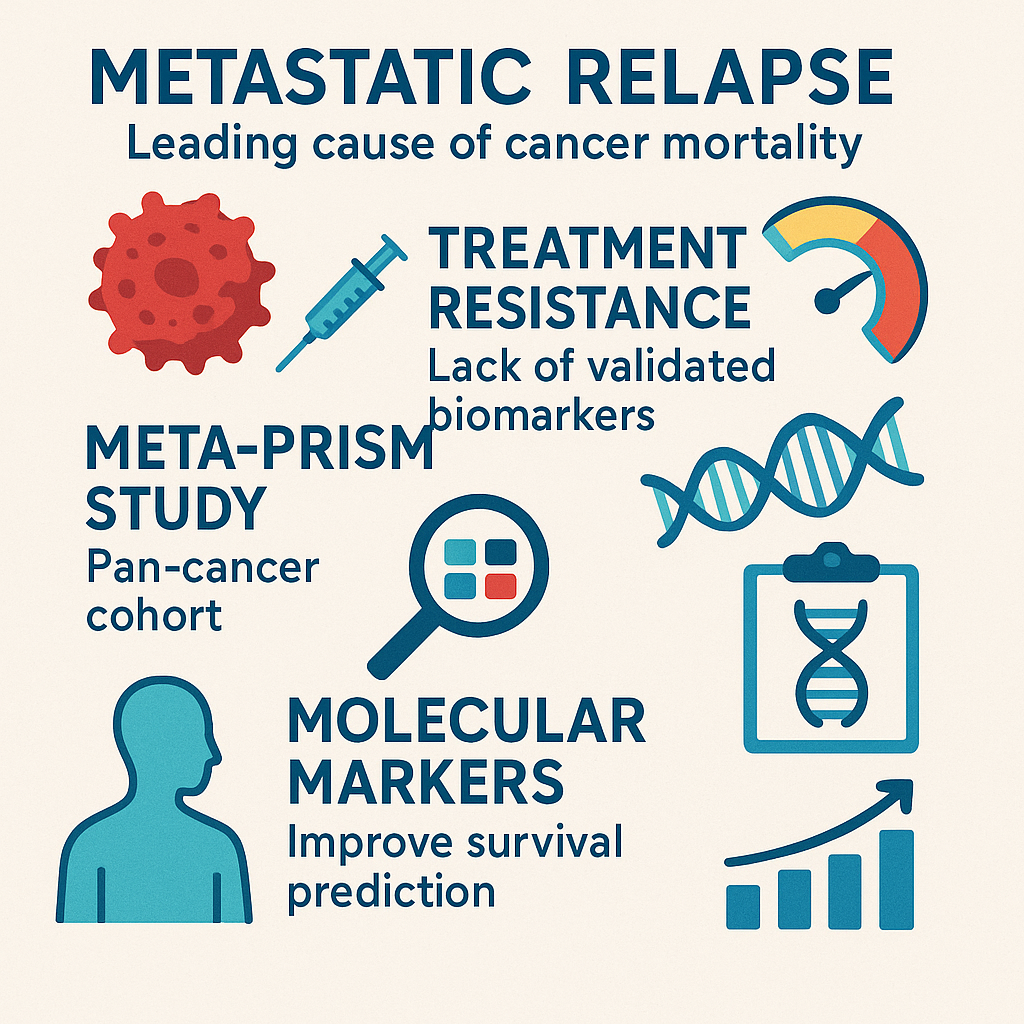
Metastatic relapse after treatment is the leading cause of cancer mortality, and known resistance mechanisms are missing for most treatments administered to patients. To bridge this gap, we analyze a pan-cancer cohort (META-PRISM) of 1,031 refractory metastatic tumors profiled via whole-exome and transcriptome sequencing. META-PRISM tumors, particularly prostate, bladder, and pancreatic types, displayed the most transformed genomes compared with primary untreated tumors. Standard-of-care resistance biomarkers were identified only in lung and colon cancers-9.6% of META-PRISM tumors, indicating that too few resistance mechanisms have received clinical validation. In contrast, we verified the enrichment of multiple investigational and hypothetical resistance mechanisms in treated compared with nontreated patients, thereby confirming their putative role in treatment resistance. Additionally, we demonstrated that molecular markers improve 6-month survival prediction, particularly in patients with advanced breast cancer. Our analysis establishes the utility of the META-PRISM cohort for investigating resistance mechanisms and performing predictive analyses in cancer. SIGNIFICANCE: This study highlights the paucity of standard-of-care markers that explain treatment resistance and the promise of investigational and hypothetical markers awaiting further validation. It also demonstrates the utility of molecular profiling in advanced-stage cancers, particularly breast cancer, to improve the survival prediction and assess eligibility to phase I clinical trials. This article is highlighted in the In This Issue feature, p. 1027.
- Impact Factor >20
 CD8+ CD226high T cells in liver metastases dictate the prognosis of colorectal cancer patients treated with chemotherapy and radical surgeryJulien Viot, Syrine Abdeljaoued, Angélique Vienot, Evan Seffar, Laurie Spehner, Adeline Bouard, Kamal Asgarov, Jean-René Pallandre, Elodie Renaude, Elodie Klajer, Chloé Molimard, Franck Monnien, Frederic Bibeau, Celia Turco, Bruno Heyd, Paul Peixoto, Eric Hervouet, Romain Loyon, Alexandre Doussot, Christophe Borg, and Marie KroemerCell. Mol. Immunol., Apr 2023
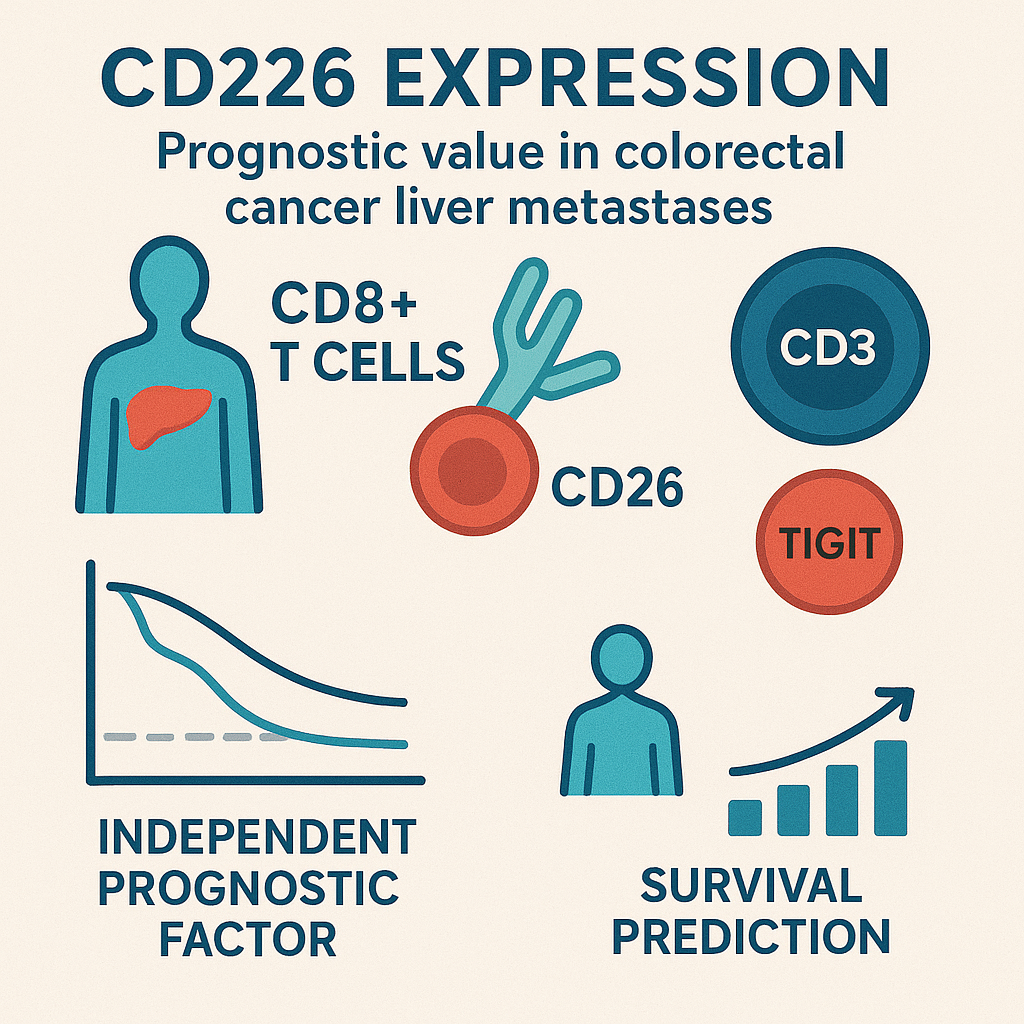
CD226 has been reported to participate in the rescue of CD8+ T cell dysfunction. In this study, we aimed to assess the prognostic value of CD226 in tumor-infiltrating lymphocytes (TILs) derived from colorectal cancer (CRC) liver metastases treated with chemotherapy and radical surgery. TILs from 43 metastases were isolated and analyzed ex vivo using flow cytometry. CD155 and CD3 levels in the tumor microenvironment were assessed by immunohistochemistry. Exploration and validation of biological processes highlighted in this study were performed by bioinformatics analysis of bulk RNA-seq results for 28 CRC liver metastases pretreated with chemotherapy as well as public gene expression datasets. CD226 expression contributes to the definition of the immune context in CRC liver metastases and primary tumors. CD226 on CD8+ T cells was not specifically coexpressed with other immune checkpoints, such as PD1, TIGIT, and TIM3, in liver metastases. Multivariate Cox regression analysis revealed CD226 expression on CD8+ T cells to be an independent prognostic factor (p = 0.003), along with CD3 density at invasion margins (p = 0.003) and TIGIT expression on CD4+ T cells (p = 0.019). CD155 was not associated with the prognostic value of CD226. Gene expression analysis in a validation dataset confirmed the prognostic value of CD226 in CRC liver metastases but not in primary tumors. Downregulation of CD226 on CD8+ TILs in the liver microenvironment was restored by IL15 treatment. Overall, CD226 expression on liver metastasis-infiltrating CD8+ T cells selectively contributes to immune surveillance of CRC liver metastases and has prognostic value for patients undergoing radical surgery.
2022
- Impact Factor 5-10
 Chemokine switch regulated by TGF-beta1 in cancer-associated fibroblast subsets determines the efficacy of chemo-immunotherapyAngélique Vienot, Jean-René Pallandre, Elodie Renaude, Julien Viot, Adeline Bouard, Laurie Spehner, Marie Kroemer, Syrine Abdeljaoued, Bas Woning, Hans Haard, Romain Loyon, Eric Hervouet, Paul Peixoto, and Christophe BorgOncoimmunology, Nov 2022
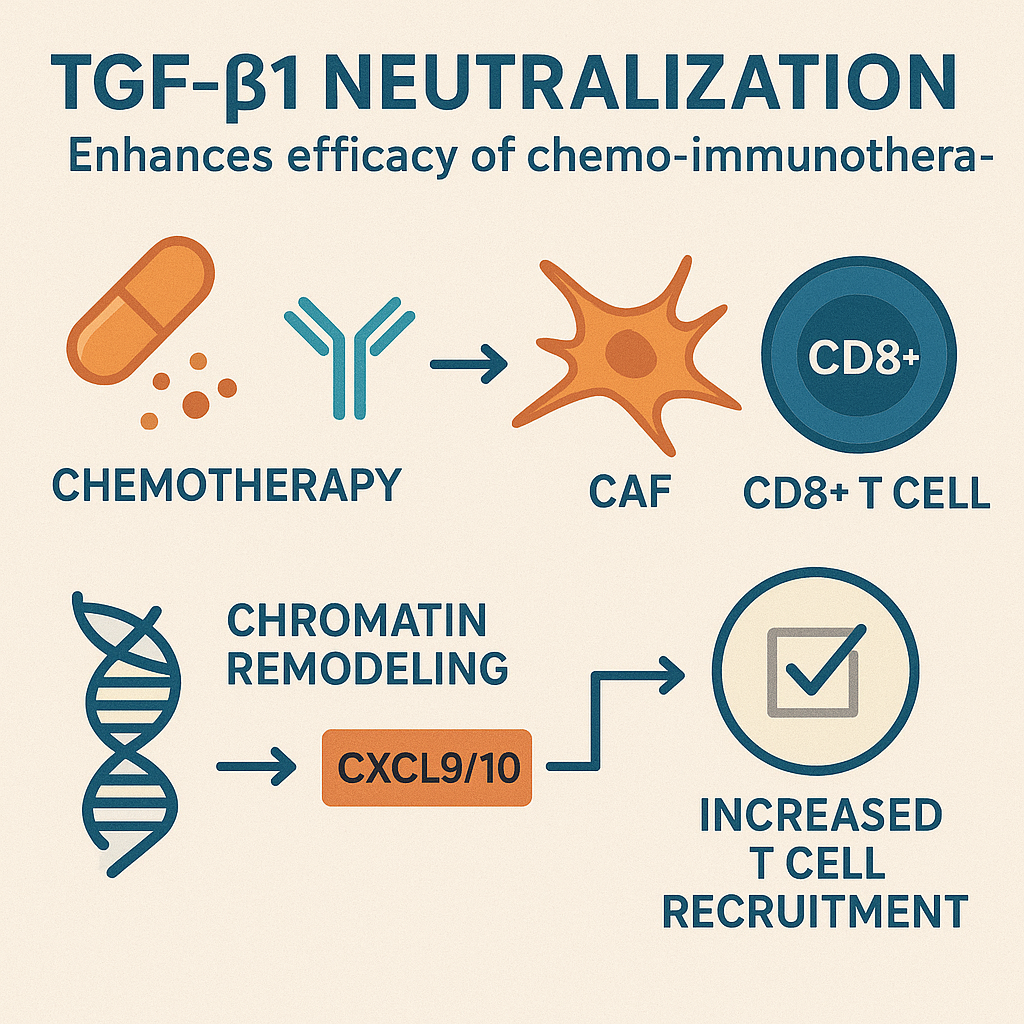
Combining immunogenic cell death-inducing chemotherapies and PD-1 blockade can generate remarkable tumor responses. It is now well established that TGF-beta1 signaling is a major component of treatment resistance and contributes to the cancer-related immunosuppressive microenvironment. However, whether TGF-beta1 remains an obstacle to immune checkpoint inhibitor efficacy when immunotherapy is combined with chemotherapy is still to be determined. Several syngeneic murine models were used to investigate the role of TGF-\beta1 neutralization on the combinations of immunogenic chemotherapy (FOLFOX: 5-fluorouracil and oxaliplatin) and anti-PD-1. Cancer-associated fibroblasts (CAF) and immune cells were isolated from CT26 and PancOH7 tumor-bearing mice treated with FOLFOX, anti-PD-1 \pm anti-TGF-beta1 for bulk and single cell RNA sequencing and characterization. We showed that TGF-beta1 neutralization promotes the therapeutic efficacy of FOLFOX and anti-PD-1 combination and induces the recruitment of antigen-specific CD8+ T cells into the tumor. TGF-\beta1 neutralization is required in addition to chemo-immunotherapy to promote inflammatory CAF infiltration, a chemokine production switch in CAF leading to decreased CXCL14 and increased CXCL9/10 production and subsequent antigen-specific T cell recruitment. The immune-suppressive effect of TGF-beta1 involves an epigenetic mechanism with chromatin remodeling of CXCL9 and CXCL10 promoters within CAF DNA in a G9a and EZH2-dependent fashion. Our results strengthen the role of TGF-beta1 in the organization of a tumor microenvironment enriched in myofibroblasts where chromatin remodeling prevents CXCL9/10 production and limits the efficacy of chemo-immunotherapy.